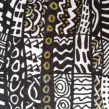
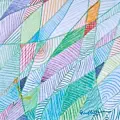
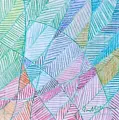
Freedom Within Structure: A Meditative Drawing
Workshop
For Seniors & Adults
Workshop Objectives
Participants will experience:
1.
How limits create freedom
2.
How repetition creates complexity
3.
How changing one variable changes energy
4.
How colour temperature affects emotion
No prior art experience required.
Session Flow
Part 1 – Introduction
•
We will create boundaries first.
•
We will repeat simple lines.
•
We will change only one thing at a time.
•
We observe how it feels.
Short reflection question:
“Where in life do you experience structure? Where do you
experience variation?”
Part 2 – Step 1: Creating Structure
Participants:
•
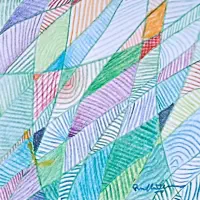
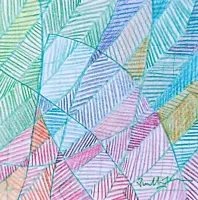
Draw 8–12 irregular shapes filling the page.
•
Lines should intersect and form compartments.
•
No rulers required — organic is good.
Teaching point: Limits create a container for exploration.
Part 3 – Step 2: Repetition Practice
Inside first 2–3 shapes:
•
Use only one colour.
•
Draw parallel lines.
•
Keep spacing consistent.
Participants to observe:
•
Does the space feel calm?
•
Does repetition become meditative?
Teaching point: Repetition builds visual density and focus.
Part 4 – Step 3: Change Direction
In the next few shapes:
•
Same colour.
•
Change only direction.
Discussion:
•
Does diagonal feel more dynamic?
•
Does vertical feel stable?
•
Does horizontal feel restful?
Teaching point: One variable shifts energy.
Part 5 – Step 4: Change Colour Temperature
Introduce warm vs cool:
•
Warm:
o
Red
o
Orange
o
Yellow
•
Cool:
o
Blue
o
Green
o
Purple
Participants to fill remaining shapes with alternating temperature.
Reflection:
•
Which areas feel closer?
•
Which feel distant?
•
Which feel lively or calm?
Teaching point: Colour temperature influences emotional
perception.
Part 6 – Group Sharing
•
Which section felt most peaceful?
•
Which felt most energetic?
•
Did structure feel limiting or freeing?
Why This Works Especially Well for Seniors
1.
No pressure for realism.
2.
Simple motor repetition is calming.
3.
Encourages focus and memory engagement.
4.
Allows emotional expression without complexity.
5.
Accessible regardless of skill level.




Freedom Within Structure: A
Meditative Drawing Workshop
For Seniors & Adults
Workshop Objectives
Participants will experience:
1.
How limits create freedom
2.
How repetition creates complexity
3.
How changing one variable changes energy
4.
How colour temperature affects emotion
No prior art experience required.
Session Flow
Part 1 – Introduction (15 min)
•
We will create boundaries first.
•
We will repeat simple lines.
•
We will change only one thing at a time.
•
We observe how it feels.
Short reflection question:
“Where in life do you experience structure?
Where do you experience variation?”
Part 2 – Step 1: Creating Structure (20 min)
Participants:
•
Draw 8–12 irregular shapes filling the
page.
•
Lines should intersect and form
compartments.
•
No rulers required — organic is good.
Teaching point: Limits create a container for
exploration.
Part 3 – Step 2: Repetition Practice (30 min)
Inside first 2–3 shapes:
•
Use only one colour.
•
Draw parallel lines.
•
Keep spacing consistent.
Participants to observe:
•
Does the space feel calm?
•
Does repetition become meditative?
Teaching point: Repetition builds visual density
and focus.
Part 4 – Step 3: Change Direction (30 min)
In the next few shapes:
•
Same colour.
•
Change only direction.
Discussion:
•
Does diagonal feel more dynamic?
•
Does vertical feel stable?
•
Does horizontal feel restful?
Teaching point: One variable shifts energy.
Part 5 – Step 4: Change Colour Temperature (30
min)
Introduce warm vs cool:
•
Warm:
o
Red
o
Orange
o
Yellow
•
Cool:
o
Blue
o
Green
o
Purple
Participants to fill remaining shapes with
alternating temperature.
Reflection:
•
Which areas feel closer?
•
Which feel distant?
•
Which feel lively or calm?
Teaching point: Colour temperature influences
emotional perception.
Part 6 – Group Sharing (15–20 min)
Invite participants to share:
•
Which section felt most peaceful?
•
Which felt most energetic?
•
Did structure feel limiting or freeing?
Why This Works Especially Well for Seniors
1.
No pressure for realism.
2.
Simple motor repetition is calming.
3.
Encourages focus and memory
engagement.
4.
Allows emotional expression without
complexity.
5.
Accessible regardless of skill level.