Meditative Art of Lines 1
Transforming Art-making Into a Form of Self-care and
Personal Development
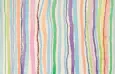
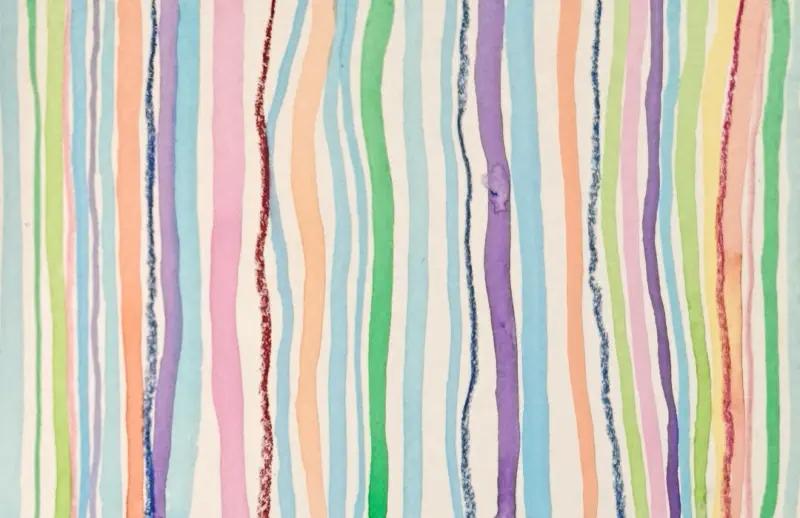
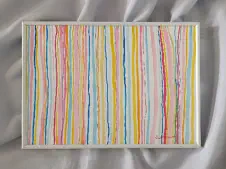
The practice of creating mindful meditative art, like the painting above,
offers a rich array of merits that extend far beyond the creation of a
beautiful object. This approach focuses on the process over the
product, transforming art-making into a form of self-care and personal
development.
Mental and Emotional Merits
•
Stress and Anxiety Reduction: The repetitive action of drawing
lines serves as a form of sensory grounding. Similar to the way a
mantra or prayer beads can calm the mind, the rhythmic movement
of the hand allows the brain to disengage from racing thoughts and
focus on the simple, deliberate task at hand. This meditative state
naturally lowers cortisol levels and promotes a sense of peace.
•
Enhanced Focus and Presence: Mindful art practice is an exercise
in being fully present. Each line requires attention to pressure,
colour, and placement, pulling the artist's focus away from external
distractions and internal anxieties. This cultivated concentration
strengthens one's ability to remain in the moment, a key tenet of
mindfulness.
•
Emotional Processing and Regulation: The canvas becomes a
non-verbal space to process emotions. The artist can channel
feelings—whether calm, anxious, or joyful—into the quality of their
lines. The choice of colour, the weight of the hand, and the rhythm
of the strokes can all become expressions of an internal state,
providing a safe and cathartic outlet for feelings that may be
difficult to articulate otherwise.
•
Cultivating Self-Acceptance: In this type of work, there is no
pressure for perfection. The natural wobbles, drips, and variations
in the lines are celebrated as a sign of the human hand at work. This
practice encourages the artist to accept imperfections in the
artwork, which can translate into a deeper sense of self-acceptance
and a release from the rigid standards often imposed by ourselves
and others.
Creative and Artistic Merits
•
Deepening Connection to Materials: By focusing on the process,
the artist develops a profound understanding of their tools. The feel
of the pencil on the paper, the way the watercolour bleeds, and the
interaction of different media all become part of the experience.
This intimate knowledge can lead to a more intuitive and confident
artistic hand.
•
Overcoming Creative Blocks: Traditional art-making can be
intimidating due to the pressure to create something meaningful or
aesthetically perfect. Mindful meditative art, with its emphasis on
the act itself, removes this pressure. The goal is simply to start and
to continue, which can be an excellent way to break through
creative paralysis and reignite a passion for creating.
•
Developing a Unique Artistic Voice: The consistent, repetitive
practice of drawing lines allows an artist to find and refine their
unique "handwriting." The subtle variations in their strokes become
their signature, leading to a style that is deeply personal and
authentic. This style is not something consciously designed but
rather an organic expression of the artist's inner self.
In essence, the merit of such painting lies in its dual function: it is both
a creative output and a deeply therapeutic personal practice. The final
artwork is a beautiful and inspiring by-product, a visual artifact of a
journey toward inner calm, presence, and creative freedom.
Chinese Version (中文版)
Link:
Rhythmic Lines & Harmonious Hues
Meditative Art of Lines 1
Meditative Art of Lines 2
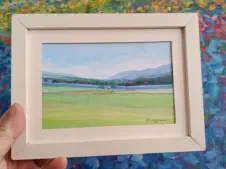
Abstract Landscape Painting
A Moment of Presence



Meditative Art of Lines 1
Transforming Art-making Into a Form of Self-
care and Personal Development
The practice of creating mindful meditative art, like
the painting above, offers a rich array of merits that
extend far beyond the creation of a beautiful object.
This approach focuses on the process over the
product, transforming art-making into a form of self-
care and personal development.
Mental and Emotional Merits
•
Stress and Anxiety Reduction: The repetitive
action of drawing lines serves as a form of
sensory grounding. Similar to the way a mantra
or prayer beads can calm the mind, the rhythmic
movement of the hand allows the brain to
disengage from racing thoughts and focus on the
simple, deliberate task at hand. This meditative
state naturally lowers cortisol levels and
promotes a sense of peace.
•
Enhanced Focus and Presence: Mindful art
practice is an exercise in being fully present.
Each line requires attention to pressure, colour,
and placement, pulling the artist's focus away
from external distractions and internal
anxieties. This cultivated concentration
strengthens one's ability to remain in the
moment, a key tenet of mindfulness.
•
Emotional Processing and Regulation: The
canvas becomes a non-verbal space to process
emotions. The artist can channel
feelings—whether calm, anxious, or joyful—into
the quality of their lines. The choice of colour,
the weight of the hand, and the rhythm of the
strokes can all become expressions of an
internal state, providing a safe and cathartic
outlet for feelings that may be difficult to
articulate otherwise.
•
Cultivating Self-Acceptance: In this type of
work, there is no pressure for perfection. The
natural wobbles, drips, and variations in the
lines are celebrated as a sign of the human
hand at work. This practice encourages the
artist to accept imperfections in the artwork,
which can translate into a deeper sense of self-
acceptance and a release from the rigid
standards often imposed by ourselves and
others.
Creative and Artistic Merits
•
Deepening Connection to Materials: By
focusing on the process, the artist develops a
profound understanding of their tools. The feel
of the pencil on the paper, the way the
watercock bleeds, and the interaction of
different media all become part of the
experience. This intimate knowledge can lead to
a more intuitive and confident artistic hand.
•
Overcoming Creative Blocks: Traditional art-
making can be intimidating due to the pressure
to create something meaningful or aesthetically
perfect. Mindful meditative art, with its
emphasis on the act itself, removes this
pressure. The goal is simply to start and to
continue, which can be an excellent way to
break through creative paralysis and reignite a
passion for creating.
•
Developing a Unique Artistic Voice: The
consistent, repetitive practice of drawing lines
allows an artist to find and refine their unique
"handwriting." The subtle variations in their
strokes become their signature, leading to a
style that is deeply personal and authentic. This
style is not something consciously designed but
rather an organic expression of the artist's
inner self.
In essence, the merit of such painting lies in its dual
function: it is both a creative output and a deeply
therapeutic personal practice. The final artwork is a
beautiful and inspiring by-product, a visual artifact
of a journey toward inner calm, presence, and
creative freedom.
Chinese Version (中文版)
Link:
Rhythmic Lines & Harmonious Hues
Meditative Art of Lines 1
Meditative Art of Lines 2
Abstract Landscape Painting
A Moment of Presence